Friday, June 14, 2013

Scout Hack #2: Suburban Lashing

My troop is a suburban troop. Good poles for lashing are hard to come by. For a number of years, this problem was amplified by the fact that it was illegal to transport hardwoods across county lines (the emerald ash borer has taken a nasty toll on our area). This made it hard to make poles in places like scout camp, where downed trees are in abundance.

The other big problem with natural poles is storing them. We are a large and growing troop with limited storage space. Obtaining natural poles that were thin, strong, and straight was already a challenge, but finding enough of them to be used by a troop of 30 boys and have space to store them...well, now we are approaching the impossible.

So here is our solution: poles worthy of the true suburban scout.

Yes, you see that correctly. They are 2x2s available at your local lumber yard. We have close to thirty of these in our closet. The fact that they are narrow, and uniformly sized, makes them very easy to store.

The trouble with 2x2s is that they are very smooth.  Even with a very tight, secure lashing, the ropes have a tendency to slip.  This has been frustrating, but also useful.  We have been able to gauge the strength of a lashing by the amount of slippage.  If the lashing slips very little, it is a very good knot.

But you'll also notice we have tried to prevent some of the slipping by putting notches in the corners of the 2x2s.  We used a hatchet to do the notching (boys love playing with hatchets) and were able to quickly run down the length of them.  The notches shown in this picture aren't quite deep enough nor wide enough to be as effective as we would like, but a little more work and it should be pretty effective.  We may also run a grinder over them at some point to really ding them up.

This certainly isn't the most ideal solution, but we've had great success getting the boys to improve their lashing by having enough of these around for everyone to be busy.


Tuesday, June 11, 2013

Phenomenal Cosmic Power...Itty Bitty Budgeting

A few of the young men in my ward were really excited to show me the box they were lashing together.  They had worked hard on it at the previous scout meeting and wanted to go look at it before we started class (we were having Sunday School class at the picnic table that day).  We wandered over to look at it and I wish I had taken a picture.  The boys, to their credit, beamed as they showed off the box they were making: sticks as thick as my little finger and no longer than 16 inches long were being lashed together with blue yarn.

I'm not sure if I should laugh or cry.

Poor man's scouting, we could call it.  Before moving on, let's make it clear that I don't fault the leaders of my ward's scouting program for this.  In fact, kudos to them for coming up with a creative solution to a real problem.  I can't confirm, but I suspect the real problem here is that the ward's troop lacks the necessary funds to buy something as simple as rope.  It turns out, this is a systemic problem in the Church.

A member of my ward once asked me what it would take to get me involved in Church sponsored scouting, and one of the first things I said was that the ward leaders would have to let me properly fund the troop. Under current guidelines, the troop's operating budget is assigned from the ward's operating budget; the total amount is determined by the bishop. The entire troop budget is supposed to come from the ward budget, and all activities and troop supplies are to be paid for out of that budget. This includes tents, stoves, cooking gear, lanterns, camp fees, admissions, etc. I've yet to see this work well.

Let's break down the costs of a troop.

Membership/Chartering
Each year, the BSA requires a scouting unit to recharter.  Part of this process is paying an annual membership fee to the BSA.  This fee helps support the national organization and infrastructure.  The total fee to the BSA is $28 (and includes a magazine subscription) for the first boy in a family, and $16 for each additional boy.

Since the LDS Church has adopted scouting as its young men program, it graciously pays the rechartering fees for all of its eligible members.  Even if the boy doesn't participate in scouting, the Church pays the rechartering fee, just in case he changes his mind.  This money is initially paid by the stake, but it automatically reimbursed by the Church.

The LDS Church charters 37,856 units1 and a total of 430,557 youth.  If we average out the chartering fees to $20 per boy, the LDS Church pays $8,611,140 per year to the BSA.  Yes, you read that correctly -- 8 million dollars2.

However, since the Church pays these fees centrally, these costs do not get shouldered by the local unit.

Participation
An active boy scout who attends 10 camp outs per year plus summer camp and a high adventure trip could probably expect to spend somewhere $600 to $800 per year. That's $200 for scout camp, another $200 for the high adventure trip, and about $20 - $40 per camp out for food and camp fees. A well funded troop can subsidize that amount and lower the cost to the boy. A very well funded troop could pay it all for the boy and make participation even easier. A thrifty troop could also find camps or trips that may cost less, but that's getting harder and harder to do.

The typical LDS ward receives between $30 and $35 per active member per year (there will be a little variation from one stake to another). That means, to fund a single boy's participation in scouting, you need 20 - 25 members in your ward. If you have 10 young men in your ward, you need a total membership of 200 - 250. That's about the average size of an LDS congregation. Using those numbers, you could easily put your entire ward budget into funding your scouting program and have no other ward programs (no Young Women, no Primary, no Relief Society, no Elders Quorum, no paper for the copier...you get the idea).

In fact, according to the Church's vision of scouting, this is exactly how the troop should be funded--exclusively from the ward budget.

Funding for Aaronic Priesthood activities, including Scouting activities where they are authorized by the Church, should come from the ward budget.
 If possible, equipment and supplies that the ward needs for annual youth camps are purchased with ward budget funds.
(Handbook 2, 8.13.7)
Equipment
Imagine you're in a ward that is using its entire budget allotment to fund the scouting program.  All of the youth are able to go on every camp out at no cost.  It's sure to be a success, right?

Now let's discuss what a troop needs to prepare the boys for the outdoor experience.  First, the obvious things: tents, lanterns, stoves, and cooking equipment.  Want to try dutch oven cooking?  You'll need at least one dutch oven per patrol.  Interested in wilderness camping, such as backpacking?  You'll also need water filters, light weight stoves, and light weight tents.  Don't forget your first aid kit.

Have you thought about the less obvious things?  First aid education supplies, ropes (both synthetic and natural fiber), poles on which to practice knots and lashings, etc.  Water carriers and you'll need an American flag and a troop flag.  Oh, and you'll need a dry place in which to store it all.

All of these thing cost money.  A large, summer season tent can be purchased for about $140, but a backpacking tent can cost between $200 and $300.  Camp stoves and light weight stoves each go for about $70 - $90.  Dutch ovens can be $90 a piece.  I just restocked my troop's rope supplies this year at a total cost of about $300.  Our cooksets cost about $160 each to assemble.

I estimate that outfitting a troop of two patrols plus an adult patrol could cost about $3,000.  That's another half of the ward budget3.

When the Ward Budget Isn't Enough
As you can imagine, the ward rarely pays all of these expenses.  It can't possibly do so and still have money to spend on other programs.  Fortunately, the Church offers a little bit of relief:
If the ward budget does not have sufficient funds to pay for an annual extended Scout camp or similar activity for young men, leaders may ask participants to pay for part or all of it. (Handbook 2, 8.13.7) 
So, if your ward doesn't have enough money to fund the entire scouting program, at least it can request money from families to help pay for scout camp.  But the ward is still on the hook for the high adventure trip, the 10 other campouts in the year, and all the equipment (realistically, about 80% of the costs).

Not to fear!  Because if the ward still doesn't have enough money, it can also use that same fundraiser from above to pay for troop equipment.  Problem solved, right!?

Don't count on it.  These fundraisers are only approved if they meet certain guidelines.  The most challenging requirement is this one:
Stakes and wards that sponsor fund-raising activities should not advertise or solicit beyond their boundaries. Nor should they sell products or services door to door. (Handbook 2, 13.6.8)
If the majority of the population in your ward boundaries is LDS, this might work well.  If not, it can be a bit harder to get a good turn out to your fund raiser.  Most fundraisers I have seen have been limited to advertising in the meetinghouse and targeting only the members of the ward4.  For a troop of ten boys, this puts a $9,000 funding need on a group of about 250 people; perhaps around 100 families.  To meet that need, each family would need to contribute $90 per year to the troop.  And we haven't even begun to talk about funding the Young Women program.

Some troops manage under these limitations, and some even flourish.  But such units seem to be the exception.  Anecdotally, the LDS troops I hear about that do flourish tend to have several thousand dollars of funds coming in every year from outside the ward budget.  But troops that don't have that kind of money lash with sticks and yarn -- a miniaturized and pathetic version of a program that could have been so much better.

So, if you want your son to have a real scouting experience, look for a troop that does a real fundraiser.


1http://www.scouting.org/filestore/pdf/210-807.pdf
2Now you see why the Church has so much influence on the BSA
3Some would argue that you could always borrow equipment from ward members. This assumes that a) members have the right equipment and b) you're willing to let the members bear the cost of boys' irresponsibility. The tents in our troop last, on average, about two years before they have to be replaced, often due to damage in the course of normal teenage rough housing and carelessness.
4Admittedly, this is a matter of lack of vision and creativity. But the Church discourages fund raisers enough that it's hard to see any reason to push out into the broader community.

Monday, June 3, 2013

What in the Blue Blazes

Now here's a thought to consider.  Every twenty minutes on the Appalachian Trail, Katz and I walked further than the average American walks in a week.  For 93 percent of all trips outside of the home, for whatever distance or whatever purpose, Americans now get in a car.  On average, the total walking of an American these days--that's walking of all types: from car to office, from office to car, around the supermarket and shopping malls--adds up to 1.4 miles a week, barely 350 yards per day.  That's ridiculous. (Bill Bryson, A Walk in the Woods, Anchor Books, 1998, p. 183)
I'm kind of guilty of this.  I probably get just under a mile a day, but that's still pretty sad.  So I'm going to try and do better.  And on top of that, I'm going to throw on a couple of big goals.

Bryson's book A Walk in the Woods a memoir of his attempt at hiking the Appalachian Trail--a mostly wilderness trail that runs over 2,200 miles from Georgia to Maine and is probably the most challenging hiking trail in the United States.  He didn't make it.  In fact, when he added up all the miles he had done, he had only walked 39.5% of the trail (850 miles of walking in one summer!).

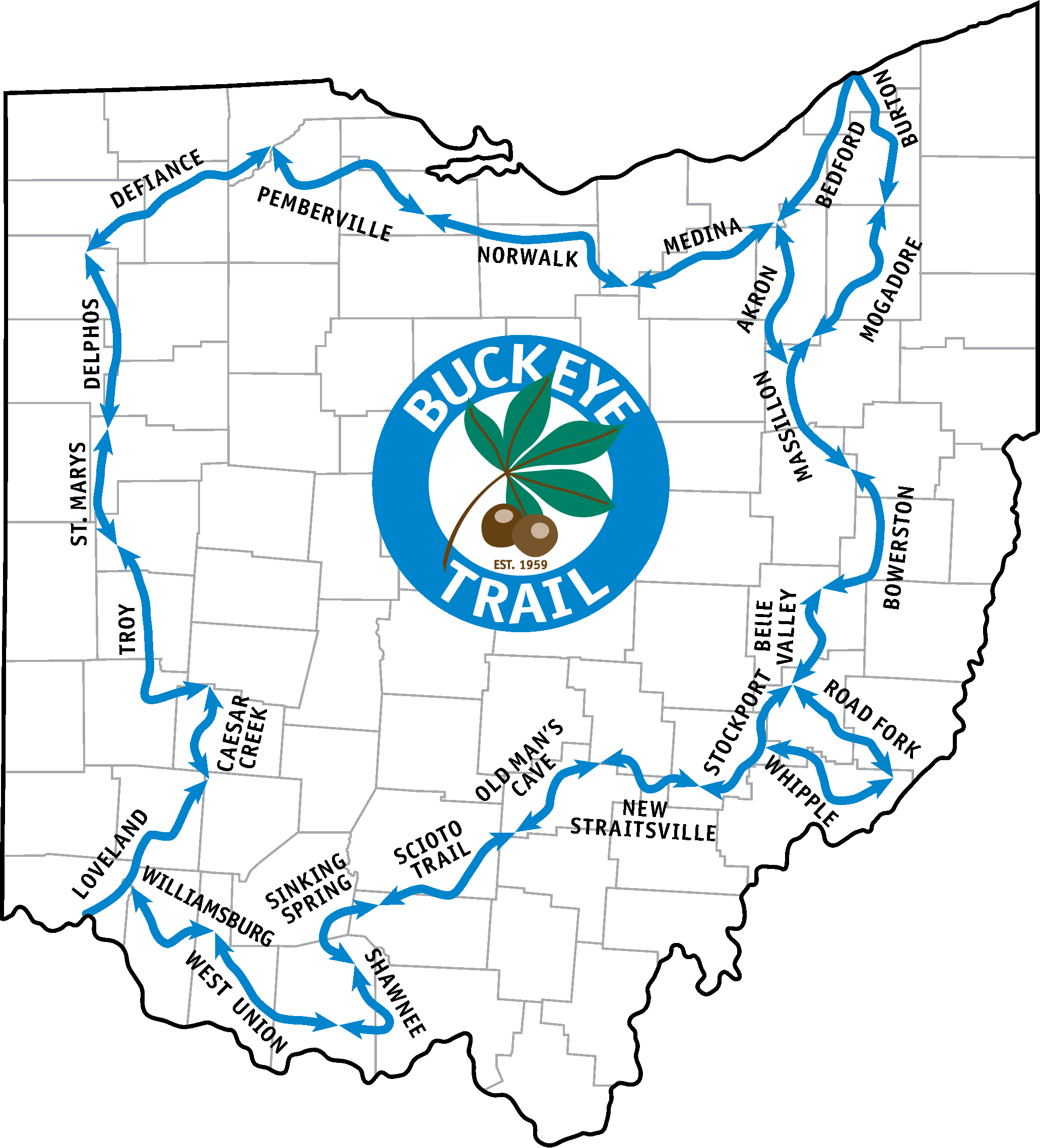
I'm not ready to take on the Appalachian Trail just yet.  I want to, but right now isn't a very good time for me to do it.  So I'm going to try a shorter, easier trail first.  I'm going to take on Ohio's Buckeye Trail.  The Buckeye Trail (marked by blue blazes) circumscribes the better part of Ohio for a total of 1,443 miles.  I'm hoping I get walk it all over the next ten years.


While the Buckeye Trail is nowhere near as challenging as the Appalachian Trail--the Buckeye Trail traverses city streets, country roads, and off-road trails--I'm hoping that the experience of planning the section hikes will give me good insights into how to plan a section hike of the Appalachian Trail in the future.

By the time this post publishes, I'll have already walked my first ten miles.  But I still have a long way to go.  Anyone want to join me for a walk?

Follow my progress here.

Friday, May 31, 2013

"Providing for your Family" and the Family Economy

The past week has fostered some interesting discussion in my home. You have read about the nature of these discussions in the previous posts. Thanks to a brilliant description from a trusted friend and mentor, I have developed a greater clarity on how to articulate my feelings on the matter.

One of the more challenging discussion topics I've engaged in over the past few days has been about how I would recommend changing our dialog in the church about the responsibility to provide for one's family. The really hard question has been this:

If I had grown up in a church that taught that it was acceptable for men to choose to stay home and raise his children while his wife worked--and had I decided that such was the course I wanted to take--would I have pursued my education as intently as I did?

In all honesty, I'm not sure I would have. At least not if I had grown up with a goal to be a stay at home father.  

So if we were to try to change the dialog to be more open about the choice of whether a mother or a father (or neither) stays home with their children, how do we do it without inadvertently discouraging higher education?

This is where the comments of my friend and mentor made such a powerful impression. She discussed the different aspects of a "family economy." This included, of course, the need for financial support. But I realized it also extended to the housework, the dishes, laundry, cleaning, and home maintenance. It included extra curriculars, vacations, and schooling and extended to church attendance, service, and gospel instruction. 

In short, the family economy was made up of all those things that made it possible for a family to thrive economically, emotionally, and spiritually.

Perhaps we should spend more time talking to our youth about that. Perhaps we could teach them that education is a virtue unto itself, and that it contributes to the family economy regardless of whether the degree is used in employment-for when you enrich the life of one family member, you enrich the life of the family.

Maybe we could teach our youth that if they pursue an education, then they have options; that they can discuss with their spouse who is better suited to employment an who is better suited to raising children.  In short, they can decide how to distribute the roles so that each person maximizes their personal contribution to the family economy.

We could teach them that they need to prepare themselves to fill both roles, and that which role they fill can be decided with their spouse.

Inevitably, someone will ask, "but how do you reconcile this with The Family: A Proclamation to the World which states, 'By divine design, fathers are to preside over their families in love and righteousness and are responsible to provide the necessities of life and protection for their families. Mothers are primarily responsible for the nurture of their children?'"

If a husband jointly decides with his spouse that the family is better served by her employment, is he not providing the necessities of life?  If a wife jointly decides with her spouse that the children are better served by his demeanor and character, is she not ensuring the nurture of her children?  Remember, the Proclamation teaches principles about the family; it does not require strict interpretation of gender roles.  As my mentor said:

The most important thing is for the family to succeed and the children to be taught that the family works together and will triumph over any obstacles that come their way.

Tuesday, May 28, 2013

If the Relief Society Weren't so Matriarchal....

....I might have planned my life to be a working mom.

Oh hey!  I'm Janelle, Benjamin's wife.  I'm guest-posting today, sharing my perspective on his most recent blog post.

Okay, before you all have a heart attack, yes, stay-at-home moms work.  I know.  I'm one of them.  You know what I mean by "working mom": a mom who goes out to work at an office-type setting every day.  A 9-5er.

Before I explain myself, I need to give a disclaimer/warning on this post: there are some skeletons in this particular closet.  The doors are opening, reluctantly.

Skeleton #1: I have ADHD.  No really.  I know.  It's shocking, right?  You never would have guessed.  I also suffer from depression, though not a severe form.  I was diagnosed with both at the age of 21.  I spent my school years floundering without direction, and succeeding only because my patient mother kept at me, much to both of our chagrin at the time.  I'm a two-time college dropout, due to a lack of self-motivation. As an ADHDer, I thrive best under pressure and with routine and structure.  It's hard to come by those things from within.

Skeleton #2: I'm also a really terrible housekeeper.  Seriously.  I don't offer to host playdates very often because the house is never clean.  I rarely even invite people over for dinner anymore, which is actually a bummer.  I get easily overwhelmed, and when I have too much to do, I just sit and do none of it.  Kind-of like when you're going on a trip, and you start your laundry at 10:00 the night before, and then pack an hour before you're ready to pull out of the driveway.  You don't do that?  Well, I do.

Skeleton #3: (deep breath) My name is Janelle, and I'm addicted to the computer.  I don't say it lightly, though it sounds like I'm making light.  My friends often tease that I'm the first to respond to emails because I'm always on the computer.  I don't think they realize just how much I actually am on the computer during the day.  I'm on Facebook, email, forums, playing logic games, etc.  All. Day. Long.  It's really hard for me to say this out loud, because it's definitely skeletal, and not something I'm proud of.  The best days are when I have a LOT to do (see structure under #1), and I don't have opportunities to be on the computer.


Okay, now that I've laid all that out (and am apparently a really lame person), let's tie it all together.

I can create chore charts and checklists for myself -- and I have -- that work well.  For about four months at a time.  I'll be honest.  When it comes to housework, I have little motivation with regard to accountability.  I know that it's disappointing to Benjamin (and to myself, yes) when the house is a mess, but I also know that he's not going to fire me for it.  At least, he hasn't yet.  I trust that he'll always forgive me, and for that reason, I don't try quite as hard.  Also, though I can plan out our days, and schedule activities, etc., true structure is lacking in at-home parenting.  I find myself, much as in school, floundering without direction or motivation.

Before Bug was born, I was a working woman.  I enjoyed that I could come home at the end of a workday, and tick off specific things that I accomplished that day.  If I was frustrated or fed up, there was usually a specific and identifiable cause I could address or ignore.

Each time Benjamin has spent extended time at home with our girls, he has made a specific effort at housework.  While I attended Girls Camp two years in a row a few years back, he cleaned the bathrooms, vacuumed, and cleaned the kitchen while I was gone (he worked during the day and had Bug with a babysitter, but he had her in the evenings and still managed to do these things).  This week, he cleaned the garage (which involved removing everything from it, sorting, rearranging, etc.), weeded a garden bed then planted it, started digging a trench behind the garage to promote better drainage, fed our girls, took walks with them, bathed them, played games with them, and even managed to strategically get a nap in while they both napped.

If I were the breadwinner in my family, I see several changes that might happen:

(1) Housekeeping would be less of an issue.  Benjamin is much more self-driven than I am.  He notices the messes more (in fairness, maybe he'd begin to notice it less as he spent more everyday time in it).

(2) Ben works better with specific ages than I do.  He understands better than I do the best ways to talk to Bug on her level, and to help her understand things a little more long-term.  He understands child psychology better than I do.  Part of that is study, but I think part of it is just a spiritual gift.

(3) Our girls would have more active days.  Instead of playing solo or watching TV most of the day (which happens when I'm on the computer all day long), they'd go out more.  Maybe it would be outside in the yard.  Maybe it would be the park.  Maybe it would be museums or the zoo.  But they would have more active childhoods.

(4) I would miss my girls.  I did miss them this week.  I think, though, that if I were in a position where being gone all day was a regular occurrence, as opposed to a sudden week out of nowhere, I would get used to it.  There would still be a little pull on my heart, but I'd acclimate.

(5) I'd spend more quality time with my family.  This seems counter-intuitive, but let me explain.  If I had a "real" job where I was already on the computer most of the day, it's not that big of a deal to have Facebook running in the background.  When I got home at the end of the workday, I'd be less likely to hop on the computer right away, and more likely to actually spend time with Benjamin and the girls.  Currently, Ben and I chat on Google Talk throughout the day.  Not all day everyday, but often.  Knowing that he would be on the computer far less than I am, I wouldn't be chatting with him nearly as much, which would result in more real conversations in the evenings.

(6) Weekends would be better.  Benjamin can't do huge home improvement projects with the girls hanging on, but he can do smaller ones.  Currently, in any given month, Ben is gone one Saturday camping, working around the house 2-3 others, and we spend family time together (hiking, playing, whatever) one weekend, though it may be only half a day.  If Ben weren't working on a series of small home improvement projects every weekend (because he was able to accomplish some of them during the week), we could have weekend that were filled more with fun and family than with work.

(7) Our garden would be happier.  He would weed it.

(8) I would be happier.  I can't say this definitively, but it's a possibility.  With so many perks (see above) of improved family home life, and the opportunity to have structure, routine, and specificity, I think I would thrive better, and be more satisfied with my life in general.  Again, I would miss my girls, but I think it's something I would adjust to.


So when Ben says, "So if Janelle ever finds a job that provides an equal or better living than mine, you'll find me at home with the girls," he's not booting me out of the house just because he wants to stay.  This is actually a topic we've discussed at length in the past, and again this week.  It's an arrangement that would work for us, and work well.